

BLOG
Custom Street Banners for Local Events and Outdoor Branding
Jul
Custom Street Banners for Local Events and Outdoor Branding
Street banners do a different job from most printed displays. They are not meant to be studied up close at a booth or read while someone waits in line. They live above eye level, repeat down a corridor, and shape how a place feels as people drive, walk, or gather. For a downtown district, college campus, civic event route, shopping street, or seasonal festival area, a custom street banner often works less like a single sign and more like a visual system stretched across the block.
That makes the buying process different too. A good order is not just about printing artwork on fabric. It is about choosing imagery, wording, and layout that still read from a pole, hold together in a series, and fit the character of the street where they will hang. Buyers comparing options at https://www.customflagshop.com/custom-street-banner/ usually get the best result when they plan the full streetscape experience before they finalize the first banner.
Think in Banner Rows, Not Single Pieces
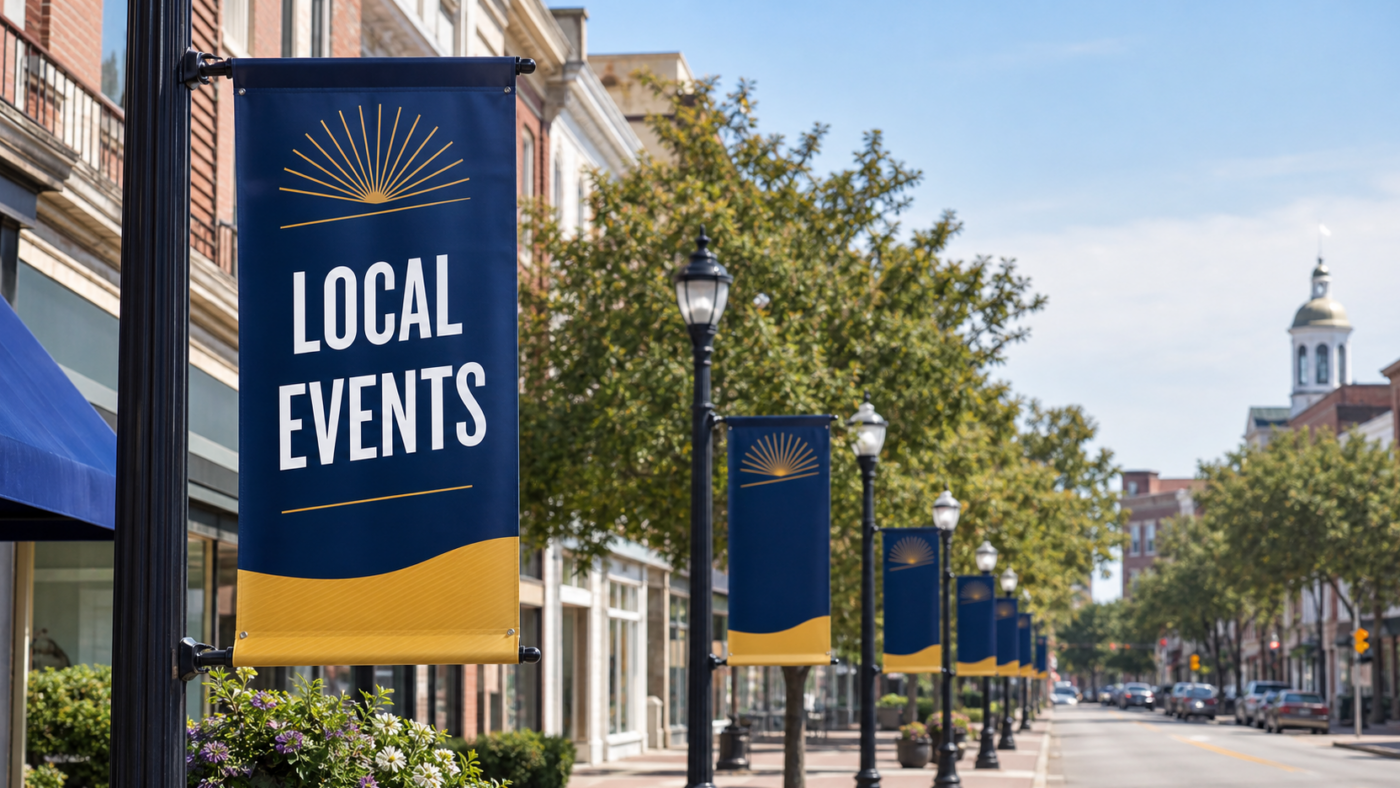
A street banner is rarely seen alone. People notice it as part of a sequence: one banner at the corner, another halfway down the block, another near parking, another beside the main event entrance. Because of that, the design has to work both individually and as part of a repeating set.
This is where many buyers can improve the final result. Instead of treating every pole banner like an isolated ad, it helps to ask what the row should communicate together. A chamber of commerce may want a consistent downtown identity. A university may want banners that reinforce school colors and campus pride along pedestrian routes. A festival organizer may need a banner system that signals arrival before visitors ever see the gate. When the banners are planned as a series, the street starts to feel coordinated rather than cluttered.
Choose the Main Viewing Distance First
Street banners are often viewed from farther away than storefront posters or indoor signs. Some are read by drivers approaching an intersection. Others are seen by pedestrians moving under trees, lights, and utility lines. The viewing distance changes what belongs on the banner.
If the banner is meant for traffic moving past at speed, the message should stay extremely short and the graphics should carry most of the recognition. If the banner is for a walkable downtown or campus promenade, the design can support a little more detail because people have more time to take it in. Either way, the safest approach is to decide what should register first from down the street: event name, district identity, season, sponsor, school brand, or civic message.
Build Around the Pole Environment
Custom street banners do not hang in empty space. They compete with trees, parked cars, storefront awnings, traffic lights, brick facades, and changing daylight. A banner that looks strong on a blank artboard may disappear once it enters a busy streetscape.
That is why background contrast matters so much. A holiday banner hanging in a tree-lined district needs different color logic than a banner installed along a concrete civic plaza. A coastal retail street may call for a lighter, more open palette than a historic main street with darker architecture. Buyers should picture the banner in its real environment and ask whether the main shapes will still separate cleanly from everything around them.
Use the Format to Shape Place Identity
The strongest street-banner programs are not always the ones with the most text. Often they are the ones that make an area feel intentional. Repeated color fields, simple iconography, clean typography, and a recognizable local message can give a district a stronger identity than a crowded banner filled with competing details.
This is especially useful for business improvement districts, municipalities, tourism corridors, school campuses, and mixed-use developments. A banner can announce a concert series, farmers market season, fall festival, graduation week, or neighborhood brand, but it can also quietly reinforce that people have entered a defined place. That sense of arrival is one of the biggest reasons organizations invest in street banners instead of relying only on ground-level signs.
Plan for Seasonal Swaps and Annual Reuse
Many street-banner programs are not one-time orders. Cities rotate seasonal artwork. Retail districts swap holiday graphics for summer event branding. Schools update banners for admissions, athletics, or commencement periods. Because of that, buyers should decide early whether the order is meant to last as an evergreen identity system or support a limited campaign window.
An evergreen banner may focus on district branding, a neighborhood name, or campus identity that remains useful for years. A seasonal set may carry event dates, themed artwork, or sponsor messages that only make sense for a shorter run. The choice affects not just the design, but also how many versions make sense to produce and how the program may grow over time.
Keep Double-Sided Visibility in Mind
Street banners are often approached from both directions, which changes how buyers should think about readability. A design that looks balanced from one side of the street may feel incomplete when seen coming from the opposite direction or from the far sidewalk. This is one of the practical differences between street banners and many other banner types.
For event routes, shopping streets, and campus drives, it helps to think about what each direction of travel needs to understand. Some installations may need mirrored visibility. Others may use paired artwork or repeated identity elements so the corridor still feels cohesive no matter how visitors enter. The goal is not simply to fill pole space, but to create consistent recognition from both approaches.
Order Around the Street You Want People to Remember
The best custom street banners are tied to a real place and a real route. They welcome visitors before the venue appears, make a district feel more established, and give repeated visibility to the name, season, or event the buyer wants people to notice. That is why the strongest orders begin with a map and a use case rather than a generic artwork template.
If you are planning banners for a downtown corridor, campus walkway, civic district, or event street, review the custom street banner options at Custom Flag Shop and build the banner set around the exact route where you want the area to feel branded and recognizable.