

Uncategorized
How to Design a Custom Burgee Flag That Represents Your Yacht Club
Jul
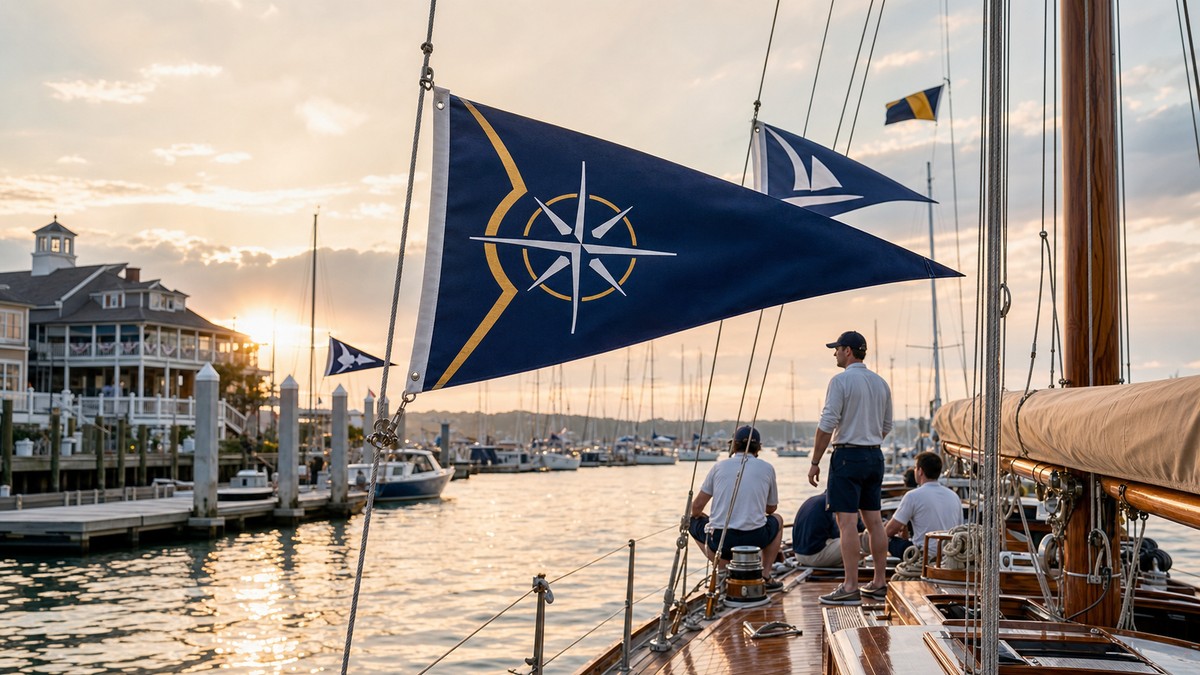
Picture the commodore of Harborview Yacht Club standing on the deck as the new season’s regatta flags snap in the breeze. The old burgee has faded, and the crew wants a fresh design that tells the club’s story at a glance. This guide walks you through a clear, step‑by‑step process so you can craft a flag that feels unmistakably yours.
Step 1: Define the Club’s Core Identity
Start by listing the elements that make your club unique — founding year, geographic landmark, motto, or a historic race victory. Write them down in a single sentence. For Harborview, that sentence might be: “Founded in 1922 on the cliffs of Cedar Bay, we celebrate the golden sunrise and the compass rose that guided our first fleet.” This sentence becomes the north star for every design decision.
Step 2: Choose a Meaningful Color Palette
Colors on a burgee are not decorative; they communicate. Limit yourself to three hues to keep the flag readable at a distance. Consider these principles:
- Heritage colors – Pull from the club’s existing jackets, pennants, or clubhouse paint.
- Visibility – Pair a dark field (navy, forest green) with a bright accent (gold, white, signal red) so the emblem pops on the water.
- Symbolic resonance – Blue for the sea, gold for sunrise, white for purity of competition.
Harborview selects navy, gold, and white — three shades already woven into its racing jerseys.
Step 3: Select Symbols That Tell the Story
Symbols should be simple enough to recognize from 100 feet away. Common choices include:
- A stylized compass rose for navigation heritage.
- An abstract wave or sail silhouette for the sport itself.
- A numeric founding year rendered in a clean typeface.
Harborview settles on a minimalist compass rose centered on a gold disc, with the year “1922” arched beneath in white script. The compass points echo the club’s original regatta courses.
Step 4: Layout and Proportion – The Burgee Geometry
A burgee is a tapered, swallow‑tailed flag. The standard ratio is 2:3 (height to width) with the swallow cut at roughly one‑third the fly length. Keep these layout rules in mind:
- Place the primary emblem in the upper hoist third — this area stays most visible when the flag flies.
- Reserve the lower tail for secondary details (year, motto) only if they remain legible.
- Maintain a clear margin of at least 10 % of the flag height around all artwork to avoid clipping during finishing.
Using a vector template, Harborview positions the compass rose in the upper hoist, centers the gold disc, and arches the year along the lower curve of the swallow.
Step 5: Review, Proof, and Refine
Before sending artwork to production, run through this checklist:
- Zoom to 100 % and verify every line is crisp; no raster artifacts.
- Print a 4‑inch mock‑up on paper; hold it at arm’s length to simulate distance viewing.
- Ask two club members unfamiliar with the design to describe what they see — their feedback reveals hidden confusion.
Harborview’s proof revealed the year “1922” was too small; they increased the font size by 20 % and thickened the compass lines.
Step 6: Production Considerations
When the artwork is locked, choose a fabric that balances durability and drape — 200‑denier nylon with UV‑resistant coating is a popular choice for marine environments. Confirm the finishing options: reinforced grommets, double‑stitched fly, and a header tape for easy hoisting. These details keep the burgee flying cleanly through a full season of regattas.
Bring Your Design to Life
With a clear concept, a focused palette, and a vetted layout, you’re ready to order a flag that will become the visual signature of your club. If you’d like a professional eye on your artwork or need help translating the design into production‑ready files, reach out for a free design consultation. Our team can turn your vision into a custom burgee flag that proudly marks every race start and harbor entrance.